
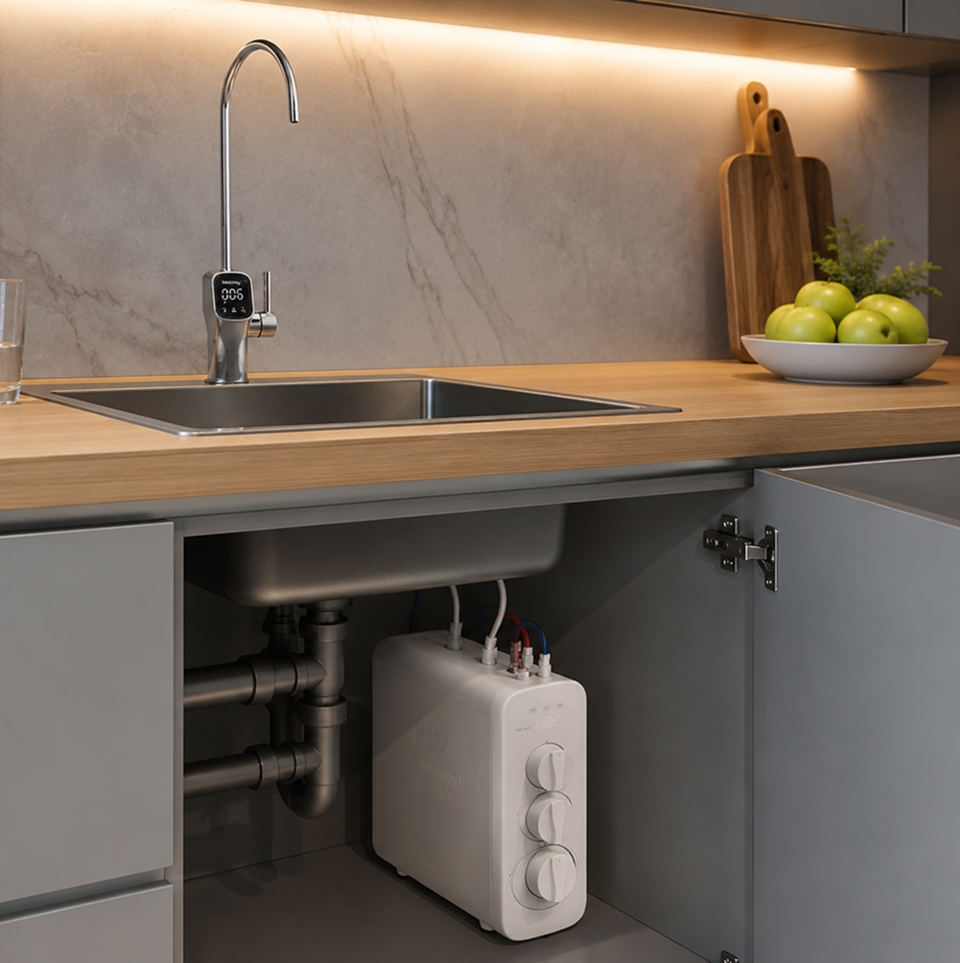
A lot of Iowa homeowners already have a water softener. In many homes, it is one of the first water-related upgrades people install because hard water is common and easy to notice. But a water softener and a reverse osmosis system do very different jobs. A softener helps with hard water problems like scale, mineral buildup, and spots on dishes. Reverse osmosis is designed for drinking water filtration and can help reduce dissolved contaminants like nitrates at the kitchen sink. If your main concern is Iowa’s nitrate issue, a softener alone is not the same as having a drinking water filtration system.
What Does a Water Softener Do?
A water softener is mainly designed to address hard water. Hard water contains minerals like calcium and magnesium. These minerals can create scale buildup in plumbing, leave spots on dishes, make soap less effective, and contribute to buildup around fixtures and appliances. The U.S. Department of Energy explains that water softeners reduce hardness by removing minerals such as calcium, iron, and magnesium from the water entering the home. In simple terms, a softener helps make water feel and behave better throughout the house. It can help with:
- Scale buildup
- Spots on dishes and glassware
- Soap and shampoo performance
- Mineral deposits around faucets
- Appliance wear related to hard water
That is useful, but it is not the same thing as drinking water filtration.
What Does Reverse Osmosis Do?
Reverse osmosis is a filtration process designed to treat drinking water at the point of use. Most residential RO systems are installed under the kitchen sink and connect to a dedicated drinking water faucet. Instead of focusing on hardness minerals, reverse osmosis pushes water through a semi-permeable membrane to help reduce dissolved contaminants before the water reaches your glass. For Iowa homeowners, this matters because Iowa State University Extension identifies reverse osmosis, distillation, and anion exchange as home treatment systems that can remove nitrate from drinking water. Reverse osmosis is commonly used for:
- Drinking water
- Cooking
- Coffee and tea
- Baby formula
- Pet water
- Everyday kitchen use
Soft Water Does Not Mean Nitrate-Free Water
This is the biggest point homeowners need to understand. A water softener may improve how water feels, but it does not automatically mean the water is better protected from nitrates. Nitrates are different from hardness minerals. They are dissolved in water and usually cannot be seen, smelled, or tasted. A home can have soft water and still have nitrate concerns. That distinction matters in Iowa, where nitrates are commonly associated with fertilizer, manure, and agricultural runoff. The federal drinking water limit for nitrate is 10 mg/L as nitrogen, and Iowa State University Extension notes that water with nitrate concentrations of 10 mg/L or higher should not be consumed by infants under six months of age or pregnant women.
Water Softener vs. Reverse Osmosis
| Category | Water Softener | Reverse Osmosis |
|---|---|---|
| Main Purpose | Reduces hardness minerals | Filters drinking water |
| Primary Target | Calcium, magnesium, iron, scale | Nitrates, TDS, PFAS, lead, fluoride, and other dissolved contaminants depending on the system |
| Typical Location | Whole-home system near water entry point | Under kitchen sink |
| Best For | Hard water, scale, appliance protection | Drinking, cooking, coffee, baby formula, and pet water |
| Nitrate Reduction | Not the main purpose | RO is identified as a nitrate treatment option |
| Customer Benefit | Better water feel and less mineral buildup | Cleaner, better-tasting drinking water at the tap |
Do You Need Both?
In many Iowa homes, the answer may be yes. A softener and a reverse osmosis system can work together because they solve different problems. The softener helps with hard water throughout the home, while the RO system focuses on the water your family actually drinks. Think of it this way:
- Water softener: protects the home from hardness issues.
- Reverse osmosis: improves the water you consume every day.
If you already have a softener, that does not mean you wasted your money. It just means your home may still benefit from a dedicated drinking water solution.
Why Under-Sink RO Makes Sense
For homeowners concerned about nitrates, under-sink reverse osmosis is a practical starting point because it treats the water used most often for drinking and cooking without requiring a larger whole-home project. It also gives families a long-term alternative to bottled water, pitcher filters, and refrigerator filters that may improve taste but are not always designed for nitrate reduction. Instead of assuming your water is handled because you have a softener, it is worth asking a more specific question: What problem am I trying to solve? If the answer is hard water, a softener makes sense. If the answer is nitrates and drinking water quality, reverse osmosis is usually the more relevant solution.