
What Is Reverse Osmosis and How Does It Work?

For many Iowa homeowners, drinking water quality has become a bigger concern in recent years. Nitrates, agricultural runoff, bottled water costs, and questions about what is actually coming out of the tap have made more families look for a long-term solution inside the home.

One of the most trusted options is reverse osmosis, often called RO.

Reverse osmosis is a drinking water filtration process that pushes water through a specialized semi-permeable membrane. This membrane allows water molecules to pass through while helping reduce many dissolved contaminants, salts, and unwanted particles. The U.S. Environmental Protection Agency describes reverse osmosis as a membrane separation process that physically removes contaminants by forcing water through a semi-permeable membrane.

How Reverse Osmosis Works

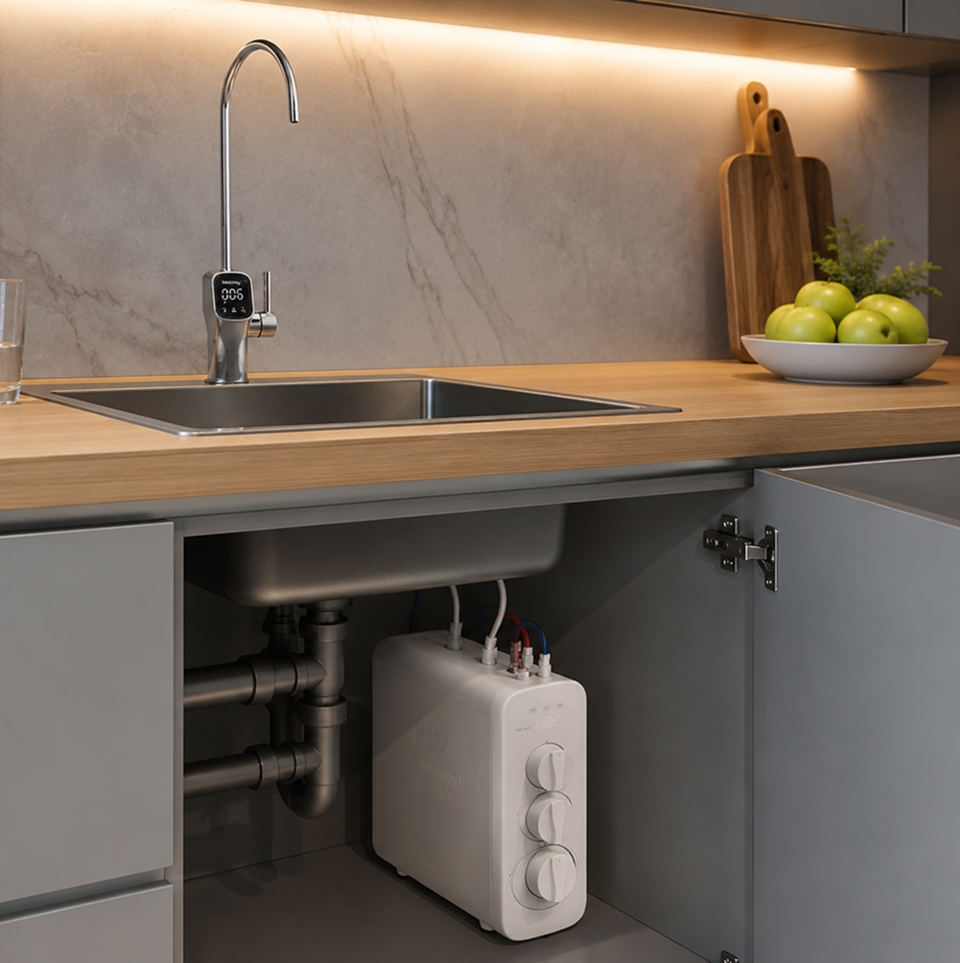
A reverse osmosis system is typically installed under the kitchen sink and connected to a dedicated drinking water faucet. When water enters the system, it moves through multiple stages of filtration before reaching the faucet.

Most under-sink RO systems follow a process like this:

Pre-filtration
Water first passes through filters designed to reduce larger particles, sediment, chlorine, taste, and odor.
Reverse osmosis membrane

Water is pushed through the RO membrane, where many dissolved contaminants are reduced.
Post-filtration

After the membrane, water may pass through additional filters to further improve taste and quality before it reaches the faucet.
Dedicated faucet

Filtered water is dispensed through a separate drinking water faucet installed at the sink.

The result is cleaner, better-tasting water for drinking, cooking, coffee, baby formula, pets, and everyday use.

Blog

Iowa’s Nitrate Issue: What Homeowners Should Know

Iowa’s Nitrate Issue: What Homeowners Should Know

Iowa’s water quality problem has become hard to ignore. Across the state, homeowners are hearing more about nitrates,agricultural runoff, public…

Reverse Osmosis vs. Bottled Water: Which Is Better for Iowa Homes?

Reverse Osmosis vs. Bottled Water: Which Is Better for Iowa Homes?

For many Iowa homeowners, bottled water has become the default backup plan. When people start hearing more about nitrates, agricultural…

Do Fridge Filters Remove Nitrates?

Do Fridge Filters Remove Nitrates?

For many homeowners, the refrigerator filter feels like the obvious first line of defense. It is already built into the…

Can You Taste Nitrates in Water?

Can You Taste Nitrates in Water?

One of the most common misunderstandings about drinking water is that clean-looking water must be safe water. It makes sense.…

What’s the Difference Between Water Softening and Reverse Osmosis?

What’s the Difference Between Water Softening and Reverse Osmosis?

A lot of Iowa homeowners already have a water softener. In many homes, it is one of the first water-related…

Best Water Filter for Nitrates: What Iowa Homeowners Should Know

Best Water Filter for Nitrates: What Iowa Homeowners Should Know

Nitrates have become one of the biggest drinking water concerns for Iowa homeowners. They are commonly associated with fertilizer, manure,…

What Is Reverse Osmosis and How Does It Work?

What Is Reverse Osmosis and How Does It Work?

For many Iowa homeowners, drinking water quality has become a bigger concern in recent years. Nitrates, agricultural runoff, bottled water…