
For many Iowa homeowners, drinking water quality has become a bigger concern in recent years. Nitrates, agricultural runoff, bottled water costs, and questions about what is actually coming out of the tap have made more families look for a long-term solution inside the home.
One of the most trusted options is reverse osmosis, often called RO.
Reverse osmosis is a drinking water filtration process that pushes water through a specialized semi-permeable membrane. This membrane allows water molecules to pass through while helping reduce many dissolved contaminants, salts, and unwanted particles. The U.S. Environmental Protection Agency describes reverse osmosis as a membrane separation process that physically removes contaminants by forcing water through a semi-permeable membrane.
How Reverse Osmosis Works
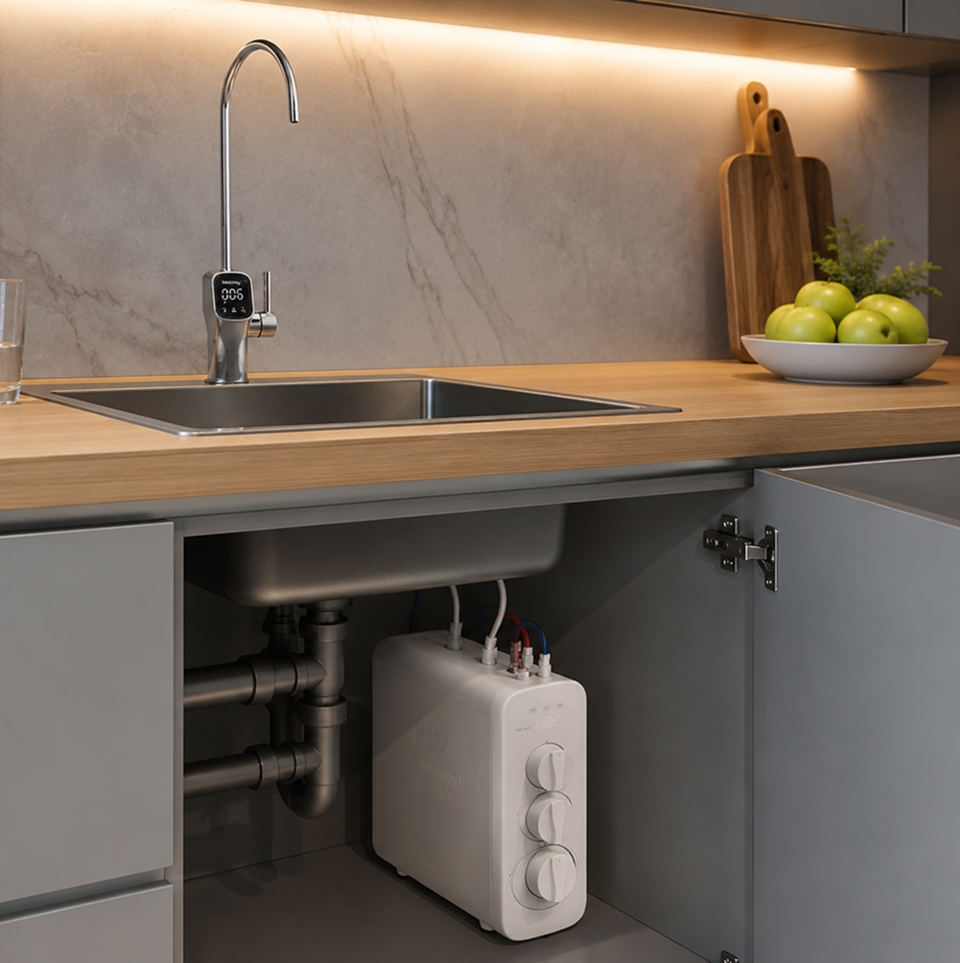
A reverse osmosis system is typically installed under the kitchen sink and connected to a dedicated drinking water faucet. When water enters the system, it moves through multiple stages of filtration before reaching the faucet.
Most under-sink RO systems follow a process like this:
Pre-filtration
Water first passes through filters designed to reduce larger particles, sediment, chlorine, taste, and odor.
Reverse osmosis membrane
Water is pushed through the RO membrane, where many dissolved contaminants are reduced.
Post-filtration
After the membrane, water may pass through additional filters to further improve taste and quality before it reaches the faucet.
Dedicated faucet
Filtered water is dispensed through a separate drinking water faucet installed at the sink.
The result is cleaner, better-tasting water for drinking, cooking, coffee, baby formula, pets, and everyday use.
Why Reverse Osmosis Matters in Iowa
In Iowa, one of the biggest reasons homeowners are looking at reverse osmosis is nitrate reduction.
Nitrates are commonly associated with fertilizer, manure, and agricultural runoff. They can enter rivers, groundwater, and private wells, especially in agricultural states like Iowa. Iowa State University Extension notes that nitrate can be removed through certain home treatment systems, including reverse osmosis, distillation, and anion exchange.
The federal drinking water limit for nitrate is 10 mg/L as nitrogen. Iowa State University Extension states that water with nitrate concentrations of 10 mg/L or higher should not be consumed by infants under 6 months of age or pregnant women.
For homeowners concerned about nitrates at the tap, reverse osmosis is one of the most practical point-of-use solutions because it treats the water used most often for drinking and cooking.
What Does Reverse Osmosis Reduce?
Reverse osmosis can help reduce a wide range of drinking water contaminants depending on the system, filter design, water quality, and maintenance schedule.
Common substances RO systems may help reduce include:
- Nitrates
- Total Dissolved Solids (TDS)
- PFAS
- Fluoride
- Chlorine
- Arsenic
- Lead
- Microplastics
- Bad taste and odor
- Other dissolved minerals and impurities
It is important to note that performance varies by system. Homeowners should look for systems with strong filtration specs, third-party testing, and clear filter replacement guidelines.
Reverse Osmosis vs. Pitcher Filters and Refrigerator Filters
Many homeowners start with bottled water, fridge filters, or pitcher filters. These can be convenient, but they are often limited compared to a dedicated under-sink reverse osmosis system.
A pitcher filter may improve taste and reduce some basic contaminants, but it usually does not provide the same level of filtration as a multi-stage RO system. Refrigerator filters can also improve taste, but they are not always designed for nitrate reduction.
Reverse osmosis is different because it uses membrane filtration, not just carbon filtration. That is why RO is often recommended when homeowners are specifically concerned about dissolved contaminants such as nitrates.
Does Reverse Osmosis Waste Water?
Traditional RO systems produce some drain water as part of the filtration process. This is because the system separates filtered water from water carrying away rejected contaminants.
However, newer tankless RO systems are much more efficient than older systems. Many modern systems are designed with improved pure-to-drain ratios, meaning they waste less water while producing filtered drinking water more quickly.
For homeowners, this means the technology has become more practical, compact, and convenient than the bulky tank systems many people may remember.
Where Is an RO System Installed?
Most residential reverse osmosis systems are installed under the kitchen sink. The system connects to the cold-water line and dispenses filtered water through a dedicated faucet.
Under-sink systems are popular because they:
- Treat water right where it is used most
- Avoid a large whole-home installation
- Keep the system hidden inside the cabinet
- Provide filtered water on demand
- Create a long-term alternative to bottled water
Some modern tankless systems also require electricity, so an available outlet under the sink may be needed.
Is Reverse Osmosis Right for Every Home?
Reverse osmosis is a strong option for many homeowners, especially those who want better drinking water at the kitchen sink. It is particularly relevant for households concerned about nitrates, taste, odor, bottled water use, or long-term water quality.
However, it is not always a replacement for every type of water treatment. For example, whole-home filtration, water softening, or specialized treatment may be needed for certain water quality issues. That is why it is important to choose the right system for the specific use case.
For many Iowa homeowners, though, an under-sink RO system is a simple and practical place to start.
The Bottom Line
Reverse osmosis is a proven drinking water filtration process that uses a semi-permeable membrane to help reduce dissolved contaminants at the point of use. For Iowa homeowners concerned about nitrates and everyday drinking water quality, an under-sink RO system can provide a convenient long-term solution without relying on bottled water or temporary filters.
Better drinking water does not need to be complicated. With the right system and professional installation, homeowners can upgrade the water they use every day right from the kitchen sink.