
One of the most common misunderstandings about drinking water is that clean-looking water must be safe water.
It makes sense. If water is clear, smells normal, and tastes fine, most people assume there is nothing wrong with it. But nitrates do not work that way.
Nitrates can be present in drinking water without changing the way the water looks, smells, or tastes. That is why many Iowa homeowners do not realize nitrate may be an issue until they test their water or hear about elevated levels in their local water source.
The Simple Answer: No, You Usually Cannot Taste Nitrates
Nitrate in water is generally colorless, odorless, and tasteless, which means it cannot be reliably detected without testing. The University of Nebraska Extension states that nitrate in water is “colorless, odorless, and tasteless,” making it undetectable without testing. (extensionpublications.unl.edu)
That is what makes nitrate different from many other water quality concerns. Chlorine may create a swimming-pool-like taste. Sulfur may create a rotten-egg smell. Rust or sediment may change the color of water. But nitrate can be invisible to your senses.
For homeowners, this means the taste test is not enough.
Why Nitrates Are a Concern in Iowa
Nitrates are commonly associated with fertilizer, manure, and agricultural runoff. In Iowa, that matters because much of the state’s water is influenced by agricultural land, drainage systems, rivers, and groundwater.
The federal drinking water limit for nitrate is 10 mg/L as nitrogen. The CDC’s archived ATSDR materials state that the EPA maximum contaminant level for nitrate in drinking water is 10 ppm, or 10 mg/L. (archive.cdc.gov)
Iowa State University Extension also states that water with nitrate concentrations of 10 mg/L or higher should not be consumed by infants under 6 months old or pregnant women. (extension.iastate.edu)
Those numbers matter because they give homeowners a real benchmark. Water can taste completely normal and still be near, at, or above a level that deserves attention.
Clear Water Does Not Always Mean Low-Risk Water
Taste, smell, and color can tell you some things about water quality, but they cannot tell you everything.
For example:
- Chlorine can affect taste and smell.
- Sediment can make water look cloudy or dirty.
- Iron can stain fixtures or discolor water.
- Sulfur can create a strong odor.
- Nitrate can be present without any obvious sign.
That is why relying only on taste can create a false sense of security. The water may feel clean, but nitrate levels require testing or verified filtration to understand and address.
Why Testing Matters
If you are on a private well, testing is especially important because private well owners are typically responsible for monitoring their own water quality. Iowa State University Extension notes that testing is the only way to know if well water is safe and recommends testing private wells at least once per year for nitrate and bacteria. (blogs.extension.iastate.edu)
For city water customers, public utilities are required to monitor and treat drinking water to meet federal standards. However, many homeowners still choose to add point-of-use filtration because they want an added layer of control over the water used most often for drinking and cooking.
What If Your Water Tastes Good?
Good-tasting water is still a good thing. It may mean your water has low chlorine taste, fewer noticeable odors, or an effective basic filter already in place.
But good taste does not prove nitrate reduction.
That is why many common household filters can be misleading. A refrigerator filter or pitcher filter may make water taste better, but unless the product is specifically designed and certified for nitrate reduction, homeowners should not assume it is reducing nitrates.
How Reverse Osmosis Helps
Reverse osmosis is different from basic taste-and-odor filtration. It uses a semi-permeable membrane to reduce dissolved contaminants at the point of use.
Iowa State University Extension identifies reverse osmosis, distillation, and anion exchange as home treatment options that can remove nitrate from drinking water. (naturalresources.extension.iastate.edu)
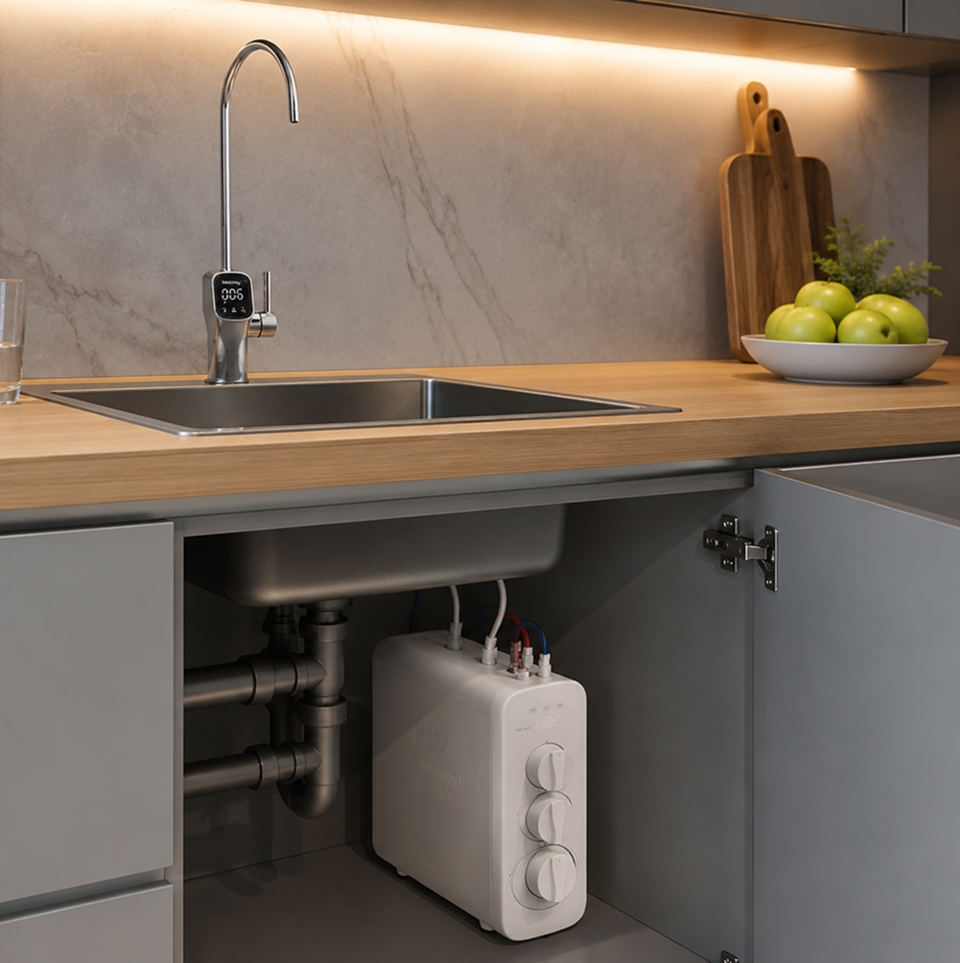
An under-sink reverse osmosis system is installed where drinking water is used most: the kitchen sink. That makes it a practical solution for:
- Drinking water
- Cooking
- Coffee and tea
- Baby formula
- Pet water
- Daily kitchen routines
What Homeowners Should Remember
The biggest takeaway is simple: you cannot rely on taste to know whether nitrates are present.
If nitrate is your concern, the right approach is testing, understanding your water source, and choosing a filtration method designed for nitrate reduction.
For Iowa homeowners, reverse osmosis offers a practical long-term solution because it treats the water your household actually drinks every day, right at the kitchen sink.